
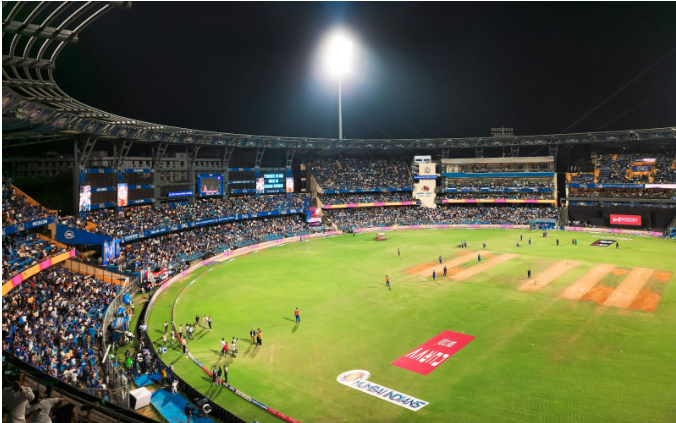
A modern cricket year is not a straight line; it’s a crowded rail map. One week is white-ball sprinting, the next is Test-match patience, then the calendar pauses for the IPL, and suddenly the same players are back in a different kit, chasing different margins. In 2026, that rhythm is louder than usual because the year is anchored by a global tournament on home soil, then stretched by tours that demand depth, recovery, and smart selection.
What makes this schedule feel decisive is how little “dead air” it allows. There are series that build toward the 2027 ODI World Cup, red-ball stretches that shape the World Test Championship cycle, and franchise weeks that keep the sport in daily conversation even when international cricket is between stations. India’s 2026 calendar is less about one headline and more about how quickly the headlines change.
The World Cup comes early, and everything tilts toward it
The centre of gravity in 2026 is the ICC Men’s T20 World Cup, co-hosted by India and Sri Lanka, running from 7 February to 8 March. It arrives early in the year, which compresses preparation and makes January’s international cricket feel like an extended warm-up rather than a separate chapter. Squad balance matters more than bravado: teams need power hitters, wrist spin, death bowling, and fielding that doesn’t leak easy twos.
For India, the tournament is also a stress test of the whole system. The knock-on effect is simple: once a World Cup sits on the calendar, everything before it is judged by momentum, and everything after it is judged by what was learned.
January sets the tone
Before the World Cup noise, India’s year begins with New Zealand touring for three ODIs and five T20Is, with fixtures scheduled from 11 to 31 January. That’s a lot of cricket in a short window, and it forces clarity on selection: who is trusted to open, who bowls the hard overs, and who can play two formats without looking like a different person each time.
This series also shows why modern schedules reward versatility. One strong ODI performance can’t hide a slow T20 start, and a T20 cameo can’t patch an ODI middle-order wobble. Against New Zealand’s disciplined white-ball cricket, the margins are rarely dramatic; they’re usually a couple of overs where a side loses shape.
Summer isn’t quiet
After the World Cup and the usual IPL interruption, the next major marker is India’s July white-ball tour of England: five T20Is and three ODIs. A packed July can expose teams that rely too heavily on a core XI, because the series quickly becomes about who can sustain intensity across formats.
It’s also a tactical checkpoint. England’s white-ball game tends to push match tempo and force bowling plans into the open. If India are thinking about the 2027 ODI World Cup, these ODIs are the kind of fixtures where a top-order plan meets real pressure, not just theory.
A franchise bridge that matters more than it seems
While India’s international calendar dominates attention, 2026 keeps proving that franchise ecosystems shape the wider cricket conversation. MI Cape Town, an SA20 side and part of the Mumbai Indians’ “#OneFamily” network, has become a useful example of how brands and teams now travel together across leagues. MelBet’s partnership with MI Cape Town adds another layer: it ties a recognisable cricket franchise identity to a betting product in a way that’s meant to feel seamless rather than loud.
In its integration work, MelBet says it has placed MI Cape Town visibility in the footer so the club stays present beyond match-day spikes. That kind of placement matters because a cricket bet line is where many fans translate mood and form into a decision, and branded team touchpoints keep the choice anchored to the sport rather than pure impulse. MI Cape Town’s identity, built around resilience and a winning mentality, fits the logic of a partnership that wants to feel like a performance culture, not just promotion. For a calendar as busy as India’s 2026, these cross-league links also keep cricket in the bloodstream when international teams are between series.
The late-year grind
The back half of 2026 is built for stamina. India’s FTP-based list includes a two-Test tour of Sri Lanka in August, a white-ball home series against West Indies in September-October, and a multi-format tour of New Zealand in October-November featuring Tests, ODIs, and T20Is. Then December brings Sri Lanka back to India for more limited-overs cricket.
The theme here is not just volume; it’s the constant switching of priorities. In a T20 year, Tests can feel like a different sport until they suddenly become the only thing that counts for a month. A tour like Sri Lanka’s is often decided by patience and footwork against spin, while New Zealand can demand a different kind of control and endurance. The “turning point” isn’t one match; it’s whether the side can keep its red-ball standards from being eroded by white-ball habits.
Betting stays part of fandom
A busy calendar pushes fans into patterns: highlights on the commute, score updates in group chats, and quick checks on prices when teams release line-ups. MelBet sits in that second-screen world, where cricket is watched, discussed, and measured at the same time. An online betting app can make that routine frictionless, but the best approach is still structured: pick a small number of check-in moments, focus on objective factors, and avoid turning every over into a new argument with yourself.
The cricket-specific edges are rarely mysterious. Pitch reports, toss outcomes, player availability, and match-ups between bowlers and batters often matter more than the loudest narratives. When the calendar is packed, fatigue and travel become part of form, and that can show up in intensity levels long before it shows up in averages. In 2026, the most “modern” betting habit is simply staying selective.
What 2026 changes
India’s 2026 cricket calendar is a story of compression and carryover. A World Cup at the start of the year can reshape roles overnight, the IPL can change how players are perceived, and the late-year tours can decide which combinations survive into 2027 planning. The teams that handle this kind of year best tend to look calm rather than heroic: they rotate with purpose, protect red-ball fundamentals, and treat white-ball innovation as a tool, not a personality.
If 2026 has one big lesson, it’s that cricket now moves on multiple clocks at once: international prestige, franchise momentum, and the daily habits of fans. The turning points won’t always be obvious in the moment, but they will show up later in the squads that feel settled, and the ones that still look like they’re chasing yesterday’s idea of the game.


